
VIBROACOUSTIC THERAPY
Sound You Feel Instead of Hear
What a Session Feels Like
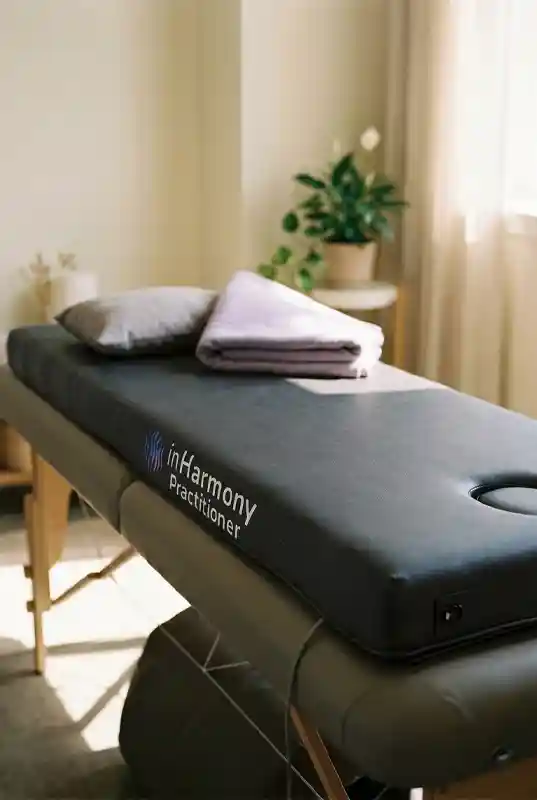
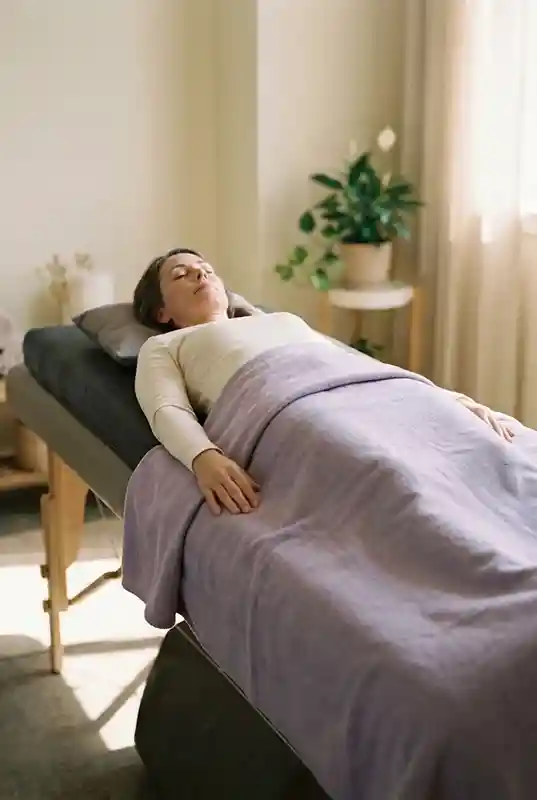
You’ll stay fully clothed. I’ll get you comfortable with a pillow and a blanket, and start the session at a level you like. Some people want to feel it distinctly, others prefer it barely there. We’ll adjust.
The first thing most people notice is that it’s hard to hold onto a thought. The vibration is steady and low, and it gives your mind something simple to settle on. Shoulders drop. Jaw unclenches. A lot of clients fall asleep, which is fine.
Sessions run about 30 minutes. Afterward people tend to feel loose and a little slowed down, the way you do coming out of a long nap or a hot bath.
Why I Pair It With Massage
Here’s why I added this to my practice.
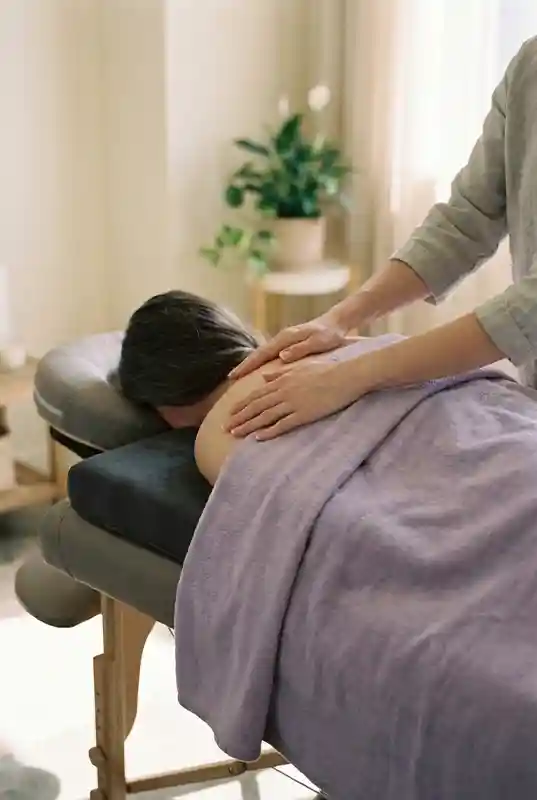
When you arrive holding a week’s worth of stress, I spend the first stretch of your massage just getting your muscles to let go before I can do the real work. Vibroacoustic therapy does that part first. Twenty or thirty minutes on the mat and your body arrives at my hands already softened, which means our time on the table goes further.Who Should Wait or Skip It
This is gentle, but it isn’t right for everyone. Please talk to me first, and check with your doctor, if any of these apply:
- You have a pacemaker, defibrillator, or any implanted stimulator
- You’re pregnant
- You have a blood clot, DVT, or a bleeding condition
- You’ve had surgery recently
- You have an acute injury, active inflammation, or an unhealed fracture
- You have very low blood pressure
- You’re prone to motion sickness or vertigo
A small number of people find sustained low frequency vibration makes them queasy or lightheaded. If that’s you, we’ll stop, and there’s no charge for the portion you didn’t use.
I’ll go over all of this with you before your first session.
Questions People Ask
Do I need to take my clothes off?
Not for a vibroacoustic session on its own. Stay fully dressed. Soft, comfortable clothing is ideal; avoid anything with thick seams or hardware down the back. If you’re getting a massage on the mat, you’ll undress to your comfort level as usual.
Will I hear music too?
Yes, usually. The vibration and the music work together. If you’d rather have quiet, we can do that.
Is this the same as a sound bath?
No. A sound bath uses gongs or bowls, and the sound reaches you through the air. Here the sound goes into your body physically, so you feel it.
How is it different from a vibrating massage chair?
A massage chair uses motors to shake or knead. This uses actual sound waves at low frequencies, which feels much smoother and more even. People who dislike massage chairs usually like this.
Is it safe?
For most people, yes. It’s noninvasive and nothing penetrates the skin. See the list above for who should check with a doctor first.
How many sessions will I need?
There’s no course of treatment to commit to. Some people add it to every visit, some do it occasionally. Try it once and see what you think.
Can I book it without a massage?
Yes. A session stands on its own.
Come Try It
I’ve been working on Valley bodies since 2014, and I don’t add anything to my practice unless I think it earns its place. This does.
Book a session and find out what it feels like.